Updated: May 2026
Raja Ampat Freediving Liveaboard Price Guide for 2024
- Budget-Conscious Phinisi: Expect rates of approximately $450-$550 per night.
- Mid-Range Luxury: The most common category averages $600-$750 per night.
- Premium & Private Charter: Top-tier vessels and private charters exceed $800 per night.
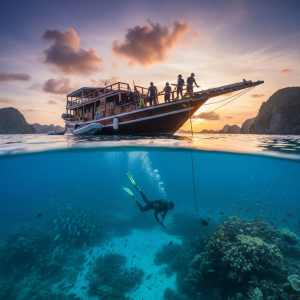
The water is a silent, liquid sapphire. Below, the reef explodes in a kaleidoscope of color so vivid it feels like a hallucination. Your heartbeat is a slow, steady drum in your ears as you glide weightlessly past a squadron of oceanic manta rays, each with a wingspan of over 5 meters. This isn’t a dream; it’s a Tuesday afternoon at Manta Sandy. You are on a freediving liveaboard in Raja Ampat, the epicenter of marine biodiversity on Earth, and you’re about to understand why the investment to get here is worth every single cent. As a travel editor who has covered the globe’s most exclusive destinations for two decades, I can tell you that no place delivers a more profound return on investment for the discerning aquatic adventurer.
Deconstructing the Raja Ampat Freediving Liveaboard Price Tag
When you first see a price tag of $6,000 for a 10-night trip, it’s natural to question the cost. But a Raja Ampat freedive liveaboard isn’t a floating hotel; it’s a highly specialized, all-inclusive expedition vehicle. The price reflects a complex operational reality rooted in extreme remoteness and a commitment to conservation. The archipelago consists of over 1,500 sparsely populated islands spread across 40,000 square kilometers of sea. Fuel is the single largest expense for any operator, as a typical 10-day itinerary can cover more than 300 nautical miles. Then there’s the crew. On a quality vessel, you’ll find a crew-to-guest ratio of nearly 1:1, including a captain, engineers, chefs, stewards, and, most critically, expert dive guides trained in freediving safety protocols. This isn’t just a scuba guide who can hold their breath; it’s a professional who understands equalization, safety lanyards, and managing a line for deep dives. The cost also includes three to four gourmet meals per day, snacks, and non-alcoholic beverages. Finally, a significant portion supports the region itself. Your trip requires a Raja Ampat Marine Park Entry Permit, which costs IDR 1,000,000 (about $65 USD) and is valid for 12 months, directly funding patrols and conservation efforts that protect this underwater Eden.
The Entry-Level Luxury Tier: Phinisi Charm from $4,500
For many, the quintessential Raja Ampat experience is aboard a traditional Phinisi schooner. These magnificent two-masted wooden ships, handcrafted by the Konjo boat builders of South Sulawesi—an art form so significant it’s recognized as a UNESCO Masterpiece of the Oral and Intangible Heritage of Humanity—offer an authentic and intimate way to explore the islands. In the $4,500 to $5,500 price bracket for a 9 or 10-night trip, you’ll find a host of exceptionally well-run Phinisis. This translates to a nightly rate of roughly $500 to $610. At this tier, expect comfortable, air-conditioned cabins, often with shared or smaller en-suite bathrooms. The communal spaces are charming and well-appointed, but the focus is on the world outside the hull. Vessels in this category, such as the *Samambaia* or *Tiare*, typically host between 12 and 16 guests, fostering a fantastic sense of camaraderie. The key for freedivers is to vet the operator’s specific provisions. Many are primarily geared towards scuba, so it’s vital to confirm they have dedicated freediving buoys, lines, and guides who understand the sport’s unique safety requirements. Ensure your chosen operator can deliver a true Raja Ampat freediving experience, not just a scuba trip you happen to be on.
The Mid-Range Sweet Spot: Bespoke Itineraries at $6,000
This is the tier where the Raja Ampat freediving liveaboard price truly aligns with uncompromising quality and specialized service. Ranging from $5,500 to $7,000 for a 10-night charter, or approximately $600 to $750 per night, these vessels represent the sweet spot for serious freedivers. Here, you transition from traditional Phinisis to either larger, more opulent wooden yachts or modern, steel-hulled expedition vessels designed for stability and space. Cabins are significantly larger, always feature well-appointed en-suite bathrooms, and may include private balconies. The crew-to-guest ratio is often better than 1:1, with a service level that anticipates your needs. My contacts at leading operators in this bracket confirm that this is where you find dedicated freediving instructors (AIDA or PADI certified) as part of the permanent crew. The itineraries become more ambitious, spending the necessary fuel to reach the iconic, labyrinthine limestone karsts of Wayag in the north or the otherworldly blue water mangroves and soft coral gardens of Misool in the south. A vessel like the *Arenui* or *Damai I* exemplifies this category—think floating boutique hotel with a five-star dive center attached. Onboard photographers, massage services, and a more extensive menu are common perks that define this exceptional value proposition.
The Apex Predator: Premium Charters and Unrivaled Access ($8,000+)
For those to whom privacy, flexibility, and ultimate luxury are paramount, the premium tier of Raja Ampat liveaboards starts at $8,000 per person and can soar past $15,000 for exclusive full-boat charters. This is the realm of super-yachts and custom-built Phinisi marvels like the 900-square-meter *Prana by Atzaró* or the expedition-grade *Aqua Blu*. At this level, with nightly rates often exceeding $850, the concept of a fixed itinerary dissolves. Your trip is bespoke. You can spend an entire day working on your deep dives at a remote pinnacle, with a dedicated high-speed tender and safety team at your disposal. The experience is curated by a private cruise director, the cuisine is prepared by a gourmet chef who has consulted you on preferences weeks in advance, and onboard amenities can include spas, open-air cinemas, and a collection of water toys. This is the choice for family buyouts, corporate retreats, or professional athletes seeking a private training ground in the world’s greatest aquarium. This tier of travel not only provides unparalleled comfort but also supports the local economy at the highest level, operating under the strictest environmental standards as promoted by authorities like Indonesia’s Ministry of Tourism.
Hidden Costs and Seasonal Premiums: What Your Per-Night Rate Doesn’t Cover
A savvy traveler knows the sticker price is only part of the story. The advertised Raja Ampat freediving liveaboard price rarely includes several key expenses that you must budget for. First, crew gratuity is a standard practice and a vital part of their income. The industry guideline is 10-15% of the charter cost, which on a $6,000 trip amounts to an additional $600 to $900 per person, typically paid in cash at the end of the journey. Second, while your Marine Park tag ($65) is a known fee, port clearance and harbor fees can add another $100-$200 to your bill. Third, gear rental beyond a weight belt can add up. If you need to rent a high-performance wetsuit, a dive computer, or long carbon fins, expect to pay $15-$30 per item per day. Fourth, almost no boat includes alcohol or satellite internet in the base price. A glass of wine with dinner or a cold Bintang beer will be extra, and a basic internet package for the 10-day trip can cost $50 for a small amount of data. Finally, timing is everything. The peak season for exploring the Raja Ampat Islands, from October through April when the seas are calmest, commands premium pricing. Booking in the shoulder months of May or September might save you 10-15%, but the weather can be less predictable.
Quick FAQ on Raja Ampat Freediving Liveaboard Prices
Why are Raja Ampat liveaboards so much more expensive than in Thailand or the Red Sea?
The primary drivers are remoteness and scale. Fuel costs to navigate the vast 1,500-island archipelago are astronomical compared to the short routes in places like the Similan Islands. Furthermore, trip durations in Raja Ampat are longer, typically 8-11 nights versus 4-6 nights elsewhere, and the operational standards, crew expertise, and conservation fees required to operate responsibly in this protected area are significantly higher.
Can I find a quality liveaboard for under $4,000?
For a standard 8-10 night trip during the main season, it is highly unlikely. Prices below the $400-$450 per night threshold should be scrutinized carefully. They may indicate a much more basic vessel, a less experienced crew, hidden extra costs, or compromised safety standards. A shorter, 6-night trip in the shoulder season might approach this price point, but it’s not the norm for a comprehensive Raja Ampat freediving expedition.
Is it better to book directly with the boat operator or through a specialized agent?
Both approaches have their merits. Booking directly can sometimes foster a clearer line of communication about your specific freediving needs. However, a reputable, specialized agent often has firsthand experience across multiple fleets and can provide unbiased recommendations. They might also have access to special offers or be able to bundle trip insurance and domestic flights, simplifying the logistics of your journey to Sorong (SOQ).
Does the liveaboard price include my flights to get there?
No, the price is exclusively for the liveaboard portion of your trip, starting and ending at the port in Sorong, West Papua. You are responsible for booking your international flights and the domestic legs within Indonesia, typically from Jakarta (CGK) or Bali (DPS) to Sorong (SOQ). You should budget an additional $600 to $1,500 for these round-trip domestic flights, depending on the season and how far in advance you book.
The investment in a Raja Ampat liveaboard is an investment in an experience that transcends a simple vacation. It is the price of admission to the planet’s most vibrant and vital marine ecosystem, a place that will recalibrate your understanding of the natural world. Planning such a pilgrimage requires insight and expertise. Explore our curated raja ampat freedive expeditions at the Raja Ampat Freedive Society to find the vessel and itinerary that matches your ambition and begin your journey to the last paradise on Earth.