Updated: May 2026
Choosing the Best Liveaboard for Freediving in Raja Ampat
- A dedicated, high-speed tender with an experienced spotter and driver.
- An itinerary focused on calm, sheltered bays for line training and deep dives.
- Onboard amenities tailored to freedivers, such as yoga decks, specialized gear storage, and wellness-focused cuisine.
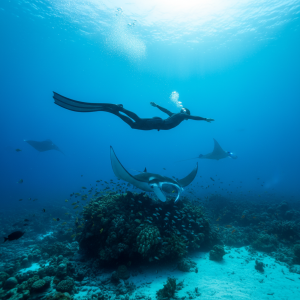
The water is a shade of blue so pure it feels conceptual. Below, a reef explodes with color, a living tapestry woven from corals, anemones, and a thousand darting fish. You hang suspended at ten meters, neutrally buoyant, the rhythmic thrum of your own heart the only sound. A giant oceanic manta ray, its wingspan a staggering five meters, glides into view, its movements a form of slow-motion ballet. This is the essence of a Raja Ampat freedive, an experience that demands more from a vessel than just a place to sleep and a tank to fill. It requires a floating sanctuary, a platform engineered for silence, safety, and the unique cadence of our sport.
Beyond the Scuba Tank: Defining the Freediver-Centric Liveaboard
For years, the liveaboard industry in Indonesia has been, quite rightly, calibrated to the rhythms of scuba diving. The daily schedule is a familiar one: dive, eat, surface interval, dive, eat, repeat. But for the freediver, this structure is often restrictive. Our needs are fundamentally different. We seek not bottom time, but quality time. We require sheltered coves with minimal current for line training, not just the high-voltage drift dives that scuba enthusiasts crave. The best operators understand this distinction. I once discussed this with Captain Iwan, a veteran of the Banda Sea who has helmed Phinisis for two decades. “A scuba diver looks for a busy highway,” he told me over a cup of Flores coffee, “but a freediver looks for a quiet cathedral.” That distinction is everything. A freediver-centric liveaboard has a captain who studies bathymetric charts not for pinnacles, but for protected drop-offs. They know that while a site like Cape Kri is legendary for its fish count, its swirling currents, which can exceed 5 knots, make it a challenging proposition for a static session. Instead, they’ll find a nearby lee shore, a placid bay where a buoy can be set for a morning of personal bests, before visiting the “main attraction” when the conditions and crowds are more favorable. Raja Ampat’s archipelago contains over 1,500 jungle-crowned islands, meaning these perfect, secluded spots are abundant—if your captain has the knowledge and willingness to find them.
The Vessel Itself: Phinisi vs. Modern Yacht
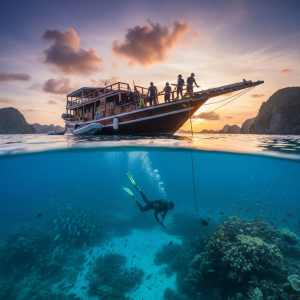
The choice of vessel in Raja Ampat typically comes down to two archetypes: the traditional Indonesian Phinisi and the modern motor yacht. Each offers a distinct character, but for the freediver, the decision rests on more than aesthetics. The Phinisi, a two-masted sailing ship handcrafted from ironwood and teak, is the soul of these waters. Their construction, a tradition recognized by UNESCO, results in a heavy, stable vessel that moves through the water with a gentle grace. Under sail, the silence is profound, allowing for a deeper connection to the environment. Their expansive, open-air decks are an unparalleled asset for freedivers, providing ample space for pre-dive stretching, yoga sessions, and breath-work clinics. A vessel like the legendary *Silolona*, which measures 50 meters in length, offers vast deck space that a modern yacht of similar capacity simply cannot match. On the other hand, modern steel-hulled yachts offer speed, climate-controlled interiors, and often, gyroscopic stabilizers for maximum comfort. They can cover the 180-kilometer distance from Sorong to the heart of Misool faster, potentially adding an extra day of diving to a trip. However, the most critical factor isn’t the hull material but the layout. Does the boat have a dedicated, shaded wellness deck? Is there a quiet lounge for post-dive meditation? A luxury Phinisi charter can command upwards of $100,000 for a 10-night trip, but the value is in the space and serenity it provides—a priceless commodity for our discipline.
The Unseen Crew: Why Your Guide and Tender Captain Matter Most
You can be on the most opulent vessel in the archipelago, but if the crew doesn’t understand freediving, the experience will be compromised. The boat is merely the platform; the crew is the operating system. This is where discerning travelers must focus their inquiries. A “dive guide” is not a “freediving guide.” Your lead guide must be a certified and experienced freediving instructor from a recognized agency like AIDA, PADI, or Molchanovs. They are responsible for more than just pointing out pygmy seahorses; they manage dive rotations, conduct safety briefings, and are capable of performing deep-water rescues. I always ask potential charters about the specific qualifications of their guides. But the true unsung hero of a freediving liveaboard is the tender captain. This individual is your surface guardian. They need to be an expert spotter, capable of tracking a diver’s bubbles from 30 meters away. They must know how to maneuver the tender to provide a quick and calm pickup without swamping the diver or interfering with a safety diver’s approach. As my friend and AIDA instructor trainer, Andrei Sidorov, insists, “The tender driver is the most important member of the safety team. They are the first and last person you connect with on every dive.” A top-tier operation invests heavily in training these teams, ensuring a seamless and safe experience where the diver’s only focus is the line below.
Itinerary Intelligence: Navigating Raja Ampat’s Vastness
Raja Ampat is not a single destination; it’s an aquatic continent covering over 40,000 square kilometers. A liveaboard itinerary is a critical choice. Most trips focus on one of two areas: the North (centered around Waigeo and the iconic Wayag limestone karsts) or the South (the soft coral paradise of Misool). For freedivers, the South often holds a slight edge. The Misool Eco Resort’s private marine reserve, a 1,220-square-kilometer no-take zone, has created an environment of staggering biodiversity and calm, protected lagoons perfect for training. Sites like “Boo Windows” or “Magic Mountain” can be explored on breath-hold, offering a perspective scuba divers miss. The North, however, has its own unique appeal, with world-class fun-diving sites like Melissa’s Garden, a shallow coral plateau ideal for long, relaxed explorations. The hallmark of the best liveaboard for freediving in Raja Ampat is itinerary flexibility. A truly bespoke operation will tailor the route to the group’s desires and the daily conditions. They’ll know to avoid the day-tripper rush at Pianemo and instead find a deserted lagoon with a 40-meter sandy bottom for a morning of technique refinement. This level of customization is what transforms a good trip into a life-altering expedition. It’s the difference between seeing Raja Ampat and truly experiencing it. This is the kind of tailored journey we help facilitate for our members at the Raja Ampat Freedive Society.
Onboard Amenities That Elevate the Experience
The details of life onboard are what separate a functional dive boat from a true luxury retreat. For the freediver, these amenities are not frivolous; they are integral to performance and recovery. A dedicated, shaded yoga deck is non-negotiable. The ability to start the day with sun salutations and end with restorative stretching is crucial for maintaining flexibility and focus. The cuisine must also be a primary consideration. A top-tier chef will provision for health and performance, offering light, hydrating, and nutrient-dense meals. Think grilled fish, fresh sashimi, tropical fruits, and complex carbohydrates—not the heavy, fried fare found on some budget boats. Proper hydration is paramount, as even a 5% drop can significantly impact breath-hold times. Look for vessels with multiple filtered water stations and fresh coconut water available. Beyond wellness, gear management is key. Is there a dedicated camera room with multiple charging points and workbenches? Are there separate, oversized rinse tanks for long fins and delicate wetsuits? Some of the more forward-thinking boats, like the *Aqua Blu*, even have an onboard masseuse or wellness therapist, a service that feels less like an indulgence and more like a necessity after a day of deep diving. According to the official Indonesian tourism board, the region is a global epicenter of marine life, and a proper vessel allows you to be in peak condition to appreciate it.
Quick FAQ: Your Raja Ampat Liveaboard Questions Answered
What is the best time of year for freediving in Raja Ampat?
The prime season runs from October to April. During these months, the seas are at their calmest and visibility consistently ranges from 20 to 30 meters. The shoulder months of October and May are particularly appealing, as they often have fewer boats, offering a more exclusive experience.
Do I need to be an advanced freediver to join a liveaboard?
Not at all. The best charters cater to a wide range of skill levels. They have the logistical capability to split groups, allowing beginners to practice equalization and duck dives in a 5-meter bay while advanced divers work on a 50-meter line just a short tender ride away. The key is to communicate your experience level beforehand.
What should a dedicated freediving charter cost?
You should expect to pay a premium over a standard scuba trip due to the specialized guides and flexible itineraries. For a high-end, freediver-focused vessel, a 7 to 10-night trip typically ranges from $5,000 to $9,000 USD per person, depending on the boat’s caliber and the specific cabin.
Should I bring my own freediving gear?
Yes, unequivocally. While some boats may have rental equipment, your core gear—mask, snorkel, long fins, wetsuit, and weight belt—is highly personalized for fit, comfort, and performance. Bringing your own is essential for a successful and comfortable trip. The boat should provide buoys, lines, and safety lanyards.
Choosing a liveaboard for a raja ampat freedive expedition is about more than selecting a cabin. It is about finding a partner that understands the unique pulse of our sport—the need for silence, the obsession with safety, and the quest for that perfect, tranquil moment between breaths. It’s an investment in an experience that transcends tourism, becoming a genuine exploration of the planet’s most vibrant underwater ecosystem. For those ready to discover this world on a single breath, the journey begins with the right vessel. Explore our curated expeditions and connect with fellow divers at the Raja Ampat Freedive Society to find your perfect match.