Updated: May 2026
What is the Best Time of Year for Freediving Raja Ampat?
- Seas are at their calmest, ensuring safe and comfortable boat travel and surface preparation.
- Underwater visibility is at its peak, frequently exceeding 30 meters for clear views of the reefs.
- This window aligns with the peak season for encountering large aggregations of Manta Rays.
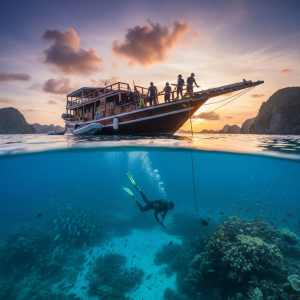
The air is thick with the scent of salt and damp earth, a primal perfume that clings to your skin. The low thrum of the boat’s twin outboards is the only sound that breaks the silence as you glide across water the color of liquid turquoise. Sheer limestone karsts, remnants of ancient coral reefs pushed from the sea floor, rise vertically around you, draped in a chaotic green tapestry of jungle. You slip over the gunwale into the warm, 29-degree Celsius water, the silence of the world above replaced by the gentle crackle of the reef below. You take your final breath, turn, and pull yourself down into the blue. This is the moment you came for, and choosing the right time of year is what makes it possible. Determining the best time of year for freediving Raja Ampat isn’t just about good weather; it’s about aligning your expedition with the archipelago’s natural rhythms to unlock its most profound secrets.
Decoding Raja Ampat’s Dual Seasons: The Dry and the Wet
Unlike more conventional travel destinations with four distinct seasons, Raja Ampat, sitting squarely on the equator, operates on a simpler, more powerful biannual cycle dictated by monsoons. Understanding this rhythm is the first step in planning any serious freediving trip. The two seasons are the dry season (or northwest monsoon) and the wet season (southeast monsoon). The prime window, coveted by divers and photographers, is the dry season, which typically runs from October through April. During these months, the prevailing winds from the northwest result in flatter, calmer seas, particularly in the central and northern parts of the archipelago, including the famous Dampier Strait. This translates to glassy surface conditions, ideal for the crucial relaxation and breathe-up phases of a freedive. Air temperatures hover around a consistent 31°C (88°F), while the water remains a welcoming 28-30°C (82-86°F). This period sees the highest visitor numbers, and for good reason—it presents the most predictable and comfortable conditions for accessing the 1,500-plus islands that constitute the regency. It is, without question, the pinnacle of the Raja Ampat freedive experience.
Conversely, the wet season arrives around May and lasts through September. The southeast monsoon brings stronger winds, which can create significant surface chop and make boat travel between dive sites, especially in open water, less comfortable and sometimes impossible. Rainfall increases, though it often comes in intense but short-lived bursts rather than all-day drizzles. The primary impact for freedivers is a potential reduction in underwater visibility, which can drop from a spectacular 30+ meters to a still-respectable 15-20 meters due to runoff and suspended sediment. Many liveaboards relocate or go into dry dock during the peak of this season (July-August), and some southern resorts, like the renowned Misool Eco Resort, close entirely. However, to dismiss this period would be a mistake for the intrepid. The northern areas remain relatively sheltered, and the rewards include near-total solitude and a wild, untamed atmosphere.
The Prime Window: Why October to April Reigns Supreme for Freedivers
For the freediver, the period from October to April offers a confluence of factors that elevate a trip from a simple vacation to a world-class aquatic immersion. The most critical element is the sea state. Calm, glassy surfaces are not just a matter of comfort; they are a matter of performance and safety. A tranquil surface allows for an undisturbed and effective breathe-up, the vital relaxation phase before a dive where the heart rate is lowered and the body is prepared for apnea. Trying to perform this crucial ritual while being jostled by waves is inefficient and stressful. Furthermore, these serene conditions make it easier for boat crews to spot a diver upon their return to the surface. According to our lead guide, Marco DeSantis, who has logged over 2,000 dives here, “The difference is night and day. In February, I can relax on the surface, look down, and clearly see the reef structure at 25 meters. That mental clarity before you even start your descent is priceless.” This is what makes Raja Ampat freediving in the high season so exceptional.
Beyond the surface, underwater visibility during these months is typically at its zenith. It’s common for visibility to extend to 30 meters (100 feet) and, on exceptional days, can push towards 40 meters. For a freediver descending a line, this means the bottom plate or the end of the line is visible from much farther up, reducing anxiety and improving equalization techniques. For the recreational freediver exploring the reef walls, it creates an immense sense of scale and wonder, allowing one to appreciate the sheer density of life from a distance. Currents, while an ever-present force in this nutrient-rich region, tend to be more predictable. The lack of significant wind-driven surface current allows the deeper, tidally-influenced currents to dominate, which experienced local guides can forecast with remarkable accuracy. This predictability allows for planning drift dives through iconic sites like The Passage, a river-like channel between Waigeo and Gam islands, with a much higher degree of safety and enjoyment.
Marine Megafauna Calendar: Timing Your Encounter with Giants
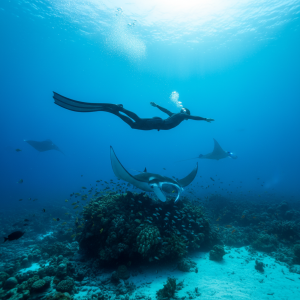
While the pristine coral gardens alone are worth the journey, many come to Raja Ampat seeking encounters with the ocean’s gentle giants. Timing your visit correctly dramatically increases the probability of these magical interactions. The dry season, from October to April, is unequivocally the peak season for manta rays. Both oceanic mantas (Mobula birostris), with wingspans reaching up to 7 meters, and the smaller reef mantas (Mobula alfredi) congregate in larger numbers at specific “cleaning stations.” Sites like Manta Sandy and Manta Ridge become bustling hubs of activity where the rays hover gracefully while small wrasse and other cleaner fish pick parasites from their bodies. The calm, clear water of this season provides unparalleled opportunities to observe this symbiotic behavior. Freediving with these creatures is a particularly special experience; the absence of noisy scuba bubbles often allows for closer and more natural encounters as the curious rays glide past. The archipelago is a critical habitat within the Coral Triangle, a region heralded by UNESCO for its marine biodiversity, and these megafauna are its titans.
While whale sharks can technically be sighted year-round, particularly in nearby Cenderawasih Bay, encounters within Raja Ampat’s core area are often linked to plankton blooms, which can be more frequent during the transitional months. However, the clear waters of the dry season simply make spotting them easier. Cetaceans also favor these calmer months. Large pods of spinner dolphins are a common sight during boat transits, and it’s not unusual to encounter pilot whales or even Bryde’s whales in the deeper channels separating the main islands. According to a 2012 survey by Conservation International, the region is home to at least 16 species of cetaceans. The sheer biomass here is staggering; Raja Ampat hosts over 1,600 species of reef fish and more than 600 species of hard coral, representing an incredible 75% of all known coral species on Earth. By visiting during the high season, you are ensuring the conditions are perfect not just for your dive, but for witnessing this incredible biodiversity in its full glory.
The Shoulder Seasons: Unlocking Value and Solitude
For the seasoned traveler who prioritizes solitude over predictability, the shoulder seasons—specifically October-November and April-May—present a compelling alternative. These transitional months, which bookend the high season, offer a unique blend of favorable conditions and diminished crowds. The weather can be more variable as the monsoon winds shift direction; you might experience a few days of wind or a passing squall, followed by a week of perfectly calm, sunny weather. This unpredictability is precisely what deters many tour operators and large groups, creating a window of opportunity for those willing to embrace a little uncertainty. The reward is a more intimate experience with the archipelago. Imagine being the only boat moored at the iconic Piaynemo viewpoint or having a world-class dive site like Melissa’s Garden entirely to yourself. For many, this trade-off is more than worth it.
From a financial perspective, the shoulder seasons can also offer significant value. Some resorts and liveaboards, eager to extend their operating season, may offer reduced rates, sometimes up to 15-20% lower than their peak January-February pricing. This can make a luxury trip significantly more accessible. The marine life is also in a state of transition. These periods can trigger plankton blooms, which, while temporarily reducing visibility to 15-20 meters, act as a dinner bell for filter-feeding megafauna. Manta ray and even whale shark sightings can be exceptionally good during these blooms. It’s a different kind of diving—more mysterious and “soupy,” but rich with life. As an editor, I’ve often found these trips to be the most memorable. There’s a raw, adventurous spirit to visiting Raja Ampat during these times, a feeling that you’re seeing it in a more natural, untamed state before the peak-season crowds descend. It’s an insider’s secret for those looking for a singular freediving adventure in Raja Ampat.
Navigating the “Off-Season”: Is Freediving from May to September Possible?
The question frequently arises: Can one still freedive Raja Ampat during the “off-season” from May to September? The answer is a qualified yes, but it requires careful planning and adjusted expectations. The primary challenge is the southeast monsoon, which brings stronger winds and rougher seas. This has a significant geographical implication. The southern region of Raja Ampat, home to the spectacular karst formations and vibrant soft corals of Misool, is highly exposed to these winds. Consequently, most liveaboards avoid this area entirely, and the majority of land-based operations, including the world-famous Misool Eco Resort, close for several months, typically from June to mid-September. Attempting to freedive in the south during this period is generally not recommended due to the challenging surface conditions and limited logistical support.
However, the story is different in the north. The areas around Waigeo island and the Dampier Strait are more sheltered from the brunt of the southeast winds. While you can still expect more rain and wind than in the dry season, diving is very much possible. Land-based resorts in the north generally remain open year-round. The key is to plan an itinerary focused on shorter-range boat trips to protected dive sites. You might not be able to cross large, open-water channels, but the wealth of dive sites within the Dampier Strait is more than sufficient for an incredible trip. Visibility might be lower, but the reefs are so dense with life that it hardly matters. According to the official Indonesian tourism board, travel is possible year-round, but visitors should be prepared for rain. This season is best suited for the flexible, budget-conscious freediver who despises crowds and is content to explore a smaller, more concentrated area. You’ll have the world’s most biodiverse marine ecosystem almost entirely to yourself—a truly priceless experience.
Quick FAQ: Your Raja Ampat Freediving Questions Answered
What is the water temperature in Raja Ampat?
The water temperature is remarkably consistent year-round, staying within a comfortable 28-30°C (82-86°F). For most freedivers, a 1.5mm or 3mm wetsuit is more for sun and jellyfish protection than for thermal insulation. You can comfortably spend hours in the water without getting cold.
Do I need to worry about currents?
Yes, absolutely. Raja Ampat’s incredible biodiversity is fueled by powerful currents that sweep nutrients through its channels. These currents can be strong and unpredictable, especially around the new and full moons. It is imperative to dive with experienced, local guides who understand the tidal patterns. A reputable operator like the Raja Ampat Freedive Society prioritizes safety by timing dives to slack tides and choosing sites appropriate for the day’s conditions.
Is a liveaboard or a resort better for freediving?
This depends entirely on your objectives. A liveaboard is essentially a floating hotel that allows you to cover vast distances and dive remote, otherwise inaccessible sites across the entire 4.6 million-hectare marine park. It’s ideal for those wanting maximum variety. A land-based resort provides a stable base, perfect for dedicated training, workshops, and in-depth exploration of a specific area. It also offers more flexibility and non-diving activities.
What about marine park fees?
All visitors entering the Raja Ampat Marine Park are required to purchase an entry permit, known as a PIN (Personal Identification Number). The fee for foreign tourists is IDR 1,000,000 (approximately $65-70 USD), and it is valid for 12 months. This fee is not an administrative tax; it directly funds conservation patrols, community programs, and scientific monitoring, ensuring the protection of the ecosystem you’ve come to enjoy.
Ultimately, the decision of when to visit rests on your personal priorities. If you seek calm seas, crystalline visibility, and the highest probability of manta encounters, the months between October and April are your undisputed target. This is the classic, postcard-perfect Raja Ampat experience. But for those who find beauty in dramatic skies, who cherish solitude above all else, and who are willing to trade a little predictability for a wilder, more intimate adventure, the shoulder and even the wet seasons hold a unique and powerful allure. The reefs are no less vibrant, the fish no less plentiful. The spirit of the place endures through all seasons. When you are ready to plan your ultimate raja ampat freedive expedition, our team of specialists is here to help you navigate the seasons and craft a journey that aligns perfectly with your vision.