Updated: May 2026
Is Freediving in Raja Ampat Safe for Beginners? Know Before You Go
Yes, freediving in Raja Ampat is safe for beginners, provided it is undertaken with certified instructors and a professional operator. The region’s safety for novices hinges on expert guidance that navigates its complex marine environment, selecting appropriate, sheltered dive sites, and providing thorough training in essential safety protocols before any open-water immersion.
- Certified Instruction: Foundational safety skills are non-negotiable and taught by accredited professionals.
- Site Selection: Operators choose calm, protected bays and walls, avoiding the strong currents present in other areas.
- Proper Equipment: Professional outfits provide high-quality, well-maintained gear suited to tropical conditions.
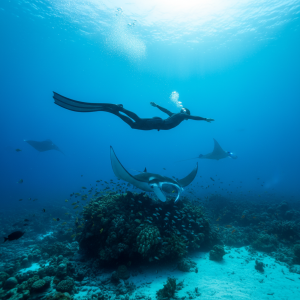
The surface of the water shatters into a million diamonds of light as you break through. Below, the world dissolves into a silent, deep blue. You are suspended, weightless, a temporary visitor in a universe that belongs to the pygmy seahorses and the oceanic manta rays. The only sound is the gentle, rhythmic thumping of your own heart, a slow, meditative drumbeat. This is the entry point to freediving in Raja Ampat—not a leap into the unknown, but a controlled, graceful descent into the planet’s most vibrant marine ecosystem. The question for many who dream of this moment isn’t about the beauty, which is undisputed, but about the safety. Can a beginner truly and safely access this underwater sanctuary? The answer is more nuanced than a simple yes or no; it lies in preparation, knowledge, and choosing the right guides to unlock this world for you.
Understanding the Raja Ampat Environment: Beyond the Postcard Image
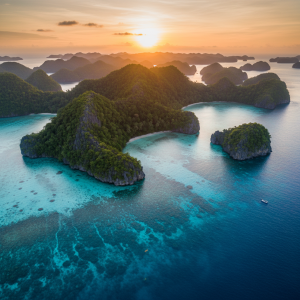
To appreciate the safety considerations of freediving here, one must first understand the sheer scale and dynamism of Raja Ampat. This is not a single, placid bay; it is a sprawling archipelago of over 1,500 jungle-clad islands scattered across 40,000 square kilometers of sea. Situated at the heart of the Coral Triangle, this region is the global epicenter of marine biodiversity, hosting an astonishing 76% of the world’s known coral species and more than 1,700 species of reef fish. This biological richness is fueled by powerful oceanic forces. The Indonesian Throughflow, a massive current that funnels water from the Pacific to the Indian Ocean, surges through the archipelago’s channels, particularly in areas like the Dampier Strait. These currents can exceed six knots, creating conditions suitable only for the most experienced divers.
For a beginner, this might sound intimidating. However, the archipelago’s complex geography is also what makes it exceptionally safe for entry-level freediving. For every channel with a challenging current, there are dozens of sheltered coves, placid lagoons, and protected reef walls where the water is as calm as a swimming pool. The key is local, expert knowledge. A seasoned operator, like the team at the Raja Ampat Freedive Society, doesn’t fight the environment; they work with its rhythms. We meticulously plan our training and exploration dives based on tidal charts, seasonal patterns, and real-time conditions, ensuring our guests are always in the right place at the right time. The water temperature remains a consistent 28-30°C year-round, eliminating the risks associated with cold water, and visibility frequently exceeds 30 meters, providing a clear, calm environment for learning the fundamentals of the sport.
The Indispensable Role of Certified Instruction
Attempting to freedive in Raja Ampat without professional training is like trying to climb a mountain without a guide—the environment is simply too powerful to be trifled with. The foundation of a safe experience is, without question, certified instruction. Reputable organizations like AIDA, PADI, or SSI have spent decades developing standardized curricula designed to build a diver’s skills and awareness from the ground up. This isn’t just about learning to hold your breath longer; it’s a holistic education in aquatic safety. Our lead instructor, who has more than 5,000 logged dives across Indonesia, often says, “Freediving is 90% mental. The safety protocols we teach are what give you the confidence to relax and let your body do what it’s capable of.”
A Level 1 (or “Wave 1”) certification course, which typically takes two to three days, covers the non-negotiable pillars of safety. You learn about the physiology of the mammalian dive reflex, proper breathing techniques for relaxation (the “breathe-up”), and, most critically, equalization methods to protect your ears from pressure changes. The curriculum is heavily focused on risk mitigation. You will spend hours in a controlled environment practicing blackout rescue procedures and learning to be an effective safety buddy for your partner. This buddy system is the cornerstone of safe freediving; you never, ever dive alone. With the Raja Ampat Freedive Society, we maintain a strict student-to-instructor ratio, never exceeding 3:1. This ensures every diver receives personalized attention and constant supervision, both on the surface and during their dives. Enrolling in one of our certified raja ampat freedive courses is the first and most important step in your journey.
Selecting the Right Dive Sites for Novices
Not all of Raja Ampat’s legendary dive sites are created equal, especially when viewed through the lens of a beginner freediver. The same powerful currents that make places like “Cape Kri” a world-renowned scuba destination, with its dizzying schools of fish, render it unsuitable for someone just learning to control their buoyancy and technique on a single breath. The art of curating a safe and inspiring beginner experience lies in meticulous site selection. A professional operation will have an intimate portfolio of locations chosen specifically for their gentle conditions and shallow-depth wonders. We bypass the high-velocity channels and instead head for the archipelago’s protected sanctuaries.
Consider a site like “Friwen Wall.” Located in a sheltered channel, its wall begins just a few meters from the surface and slopes gently, covered in vibrant soft corals and sea fans. The lack of current makes it an ideal classroom for practicing line-diving techniques. Another prime example is “Yenbuba Jetty,” where the pillars of a simple wooden pier have created an artificial reef teeming with life in less than 10 meters of water. Here, you can spend an entire session observing schools of sweetlips and batfish without ever feeling exposed to the open ocean. For those dreaming of larger encounters, “Manta Sandy” offers a shallow cleaning station (around 12-15 meters) where oceanic mantas congregate. We can observe these magnificent creatures from the surface or with short, shallow dives, providing an awe-inspiring experience without the need for advanced depth capabilities. According to Indonesia’s official tourism portal, the region’s diversity allows for this careful curation, making it accessible to all levels. Our itineraries are fluid, always adapting to the day’s conditions to guarantee both safety and spectacle.
Marine Life Encounters: Safe and Ethical Interaction
The primary allure of Raja Ampat is its unparalleled biodiversity. For many beginners, however, this also brings a degree of apprehension. What about sharks? What about venomous creatures? It’s a valid concern, and part of our job is to replace fear with informed respect. The most common sharks encountered here are blacktip and whitetip reef sharks, which are typically shy and pose virtually no threat to humans; their presence is a sign of a healthy, thriving ecosystem. Of the 1,765 fish species recorded here by Conservation International, the vast majority are completely harmless. The real, albeit minimal, risks come from creatures you might not expect: stonefish, lionfish, and fire coral. These are defensive, not aggressive, hazards.
Safety in this context is a direct result of the skills learned in a freediving course. Proper buoyancy control is paramount. By learning to be neutrally buoyant, you can hover effortlessly over the reef, observing its inhabitants without needing to touch or disturb anything. This prevents accidental contact with camouflaged stonefish or delicate, stinging hydroids like fire coral. Our briefings before every dive are comprehensive, covering not only the dive plan but also the specific marine life we expect to see and how to interact with it ethically and safely. We teach the universal rule of passive observation: look, but never touch. This protects both the diver and the fragile reef, which is part of a UNESCO World Heritage Tentative List site. The goal is to be a silent observer, a fleeting shadow in their world. This mindful approach transforms a potentially intimidating encounter into a moment of profound connection with the natural world.
The Logistics of Safety: Before You Even Enter the Water
A truly professional operation understands that safety begins long before the boat’s engine starts. It is woven into every logistical detail, from the equipment you wear to the emergency protocols you will likely never need. For a beginner, properly fitting gear is a critical first step. A leaky mask or fins that cause cramps can quickly turn a dive from pleasant to stressful. We provide high-quality, low-volume masks and soft, comfortable fins, ensuring a proper fit for every guest. While the water is a warm 29°C, we also provide thin 1.5mm or 2mm wetsuits or dive skins, which offer protection from the intense equatorial sun and minor stings from unseen jellyfish.
Beyond personal gear, the vessel itself is a crucial part of the safety infrastructure. Our dive boats are equipped with marine-grade first aid kits, emergency oxygen, and robust communication systems, including satellite phones for areas beyond the reach of the limited local cell service which covers less than 30% of the archipelago. We have established emergency action plans and a clear line of communication with medical facilities in Waisai and Sorong. While freediving does not carry the risk of decompression sickness like scuba diving, having a clear evacuation plan is a hallmark of a responsible operator. Every morning begins with a detailed briefing covering the day’s plan, weather conditions, and safety procedures. This meticulous preparation builds a framework of security that allows you to fully immerse yourself in the experience, confident that every contingency has been considered and planned for by our expert team.
Quick FAQ: Your Raja Ampat Freediving Questions Answered
Do I need to be a strong swimmer to freedive?
You need to be comfortable and confident in the water, but freediving is less about athletic swimming and more about relaxation and technique. Basic water competency, such as being able to swim 200 meters unassisted, is required for most certification courses. The focus is on efficiency of movement and energy conservation, not speed or power.
What is the best time of year for beginner freediving in Raja Ampat?
The primary season runs from October to April. During these months, the seas are generally calmer and the weather is drier, resulting in consistently excellent visibility, often exceeding 30 meters. This period avoids the stronger winds and surface chop that can occur during the southeast monsoon from May to September.
Is special travel insurance required?
Absolutely. Standard travel insurance policies often exclude “extreme” activities like freediving. It is essential to secure a policy that explicitly covers freediving to the depth you are certified for (e.g., 20 meters for a Level 1 course). Ensure your policy includes comprehensive medical evacuation coverage, as medical facilities in this remote region are limited.
How deep will I actually dive as a beginner?
A Level 1 or Wave 1 certification course qualifies you to dive to a maximum depth of 20 meters (66 feet). However, the training process is gradual. Your first dives will be much shallower, focusing on mastering equalization and technique in the 5-10 meter range. The progression to deeper dives only happens when you are comfortable and have demonstrated proficiency in all safety skills.
The silent, sun-dappled world beneath the waves of Raja Ampat does not have to be an intimidating frontier reserved only for elite athletes. For the prepared beginner, it is a welcoming sanctuary. Safety here is not a matter of chance; it is a direct result of knowledge, respect for the ocean, and the decision to place your trust in the hands of dedicated professionals. By investing in proper training and choosing an operator who prioritizes safety above all else, you transform a question of risk into an affirmation of adventure. The vibrant reefs and majestic creatures are waiting. Let us show you how to meet them safely. Explore our certified courses and guided expeditions to begin your journey into the heart of the Coral Triangle and discover the world of Raja Ampat Freediving with us.