Updated: May 2026
The Ultimate Raja Ampat Freediving Route for Epic Underwater Views
- It provides access to sites containing over 75% of the world’s known coral species.
- The route prioritizes iconic locations like Cape Kri, Melissa’s Garden, and Magic Mountain.
- A minimum 10- to 12-day charter is necessary to properly cover the vast distances involved.
The teak deck of the phinisi is warm beneath your bare feet. Below, the Celebes Sea, a sheet of impossible blue, waits. You take a final, cleansing breath, the air thick with salt and the scent of distant rain on the jungle canopy of a nearby island. This is the moment of descent. As you slip beneath the surface, the world dissolves into a silent, liquid cosmos. The goal of any serious diver in these waters is not simply to visit, but to understand. Raja Ampat is not a single destination; it is an epic, a 4.6-million-hectare aquatic continent. To truly experience its grandeur on a single breath requires more than just skill; it requires a route, a narrative thread connecting its most profound underwater chapters.
Charting the Course: Why a Liveaboard is Non-Negotiable for This Route
Let’s be clear from the outset: to follow the definitive raja ampat freediving route, a land-based resort will not suffice. While the homestays and eco-resorts of the Dampier Strait offer magnificent localized diving, the true scale of the archipelago, which spans over 40,000 square kilometers and includes some 1,500 islands, demands mobility. The distances between the northern karst formations of Wayag, the central channel currents of the Dampier Strait, and the southern sanctuaries of Misool are vast. A traditional Indonesian phinisi or a modern expedition vessel is not a convenience; it is the key that unlocks the kingdom. As my trusted expedition leader, Captain Adi Saputra, who has been navigating these waters for over 20 years, puts it, “Trying to see Raja Ampat from one island is like trying to see Europe from a hotel in Paris. You see the heart, perhaps, but you miss the soul.” A 10-day charter, which can range from $6,000 to over $12,000 per person on a luxury vessel, allows for the overnight passages required to connect these disparate, world-class zones. The primary season, running from October through April, provides the calmest seas for these crossings, ensuring your surface intervals are as serene as your dives.
The Dampier Strait: The Beating Heart of the Coral Triangle
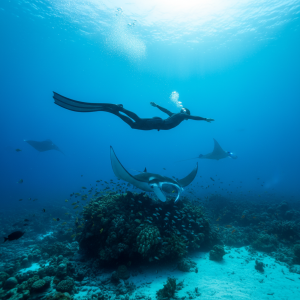
Our journey begins where the Pacific and Indian Oceans collide: the Dampier Strait. This channel, separating the islands of Waigeo and Batanta, acts as a massive nutrient funnel, creating the hyper-rich conditions that have made this area legendary. This is the epicenter of the Coral Triangle, a marine region that holds the highest diversity of marine species on Earth. Our first drop is at Cape Kri, a site made famous when ichthyologist Dr. Gerald R. Allen recorded 374 species of fish on a single scuba dive—a world record that still stands. For a freediver, this translates to a visual overload. On a single 20-meter descent, you can glide past schools of barracuda, fusiliers, and jacks so dense they momentarily block the sun. The water temperature is a constant 28-30°C, allowing for long, comfortable sessions without the need for a thick wetsuit. From there, we motor to Blue Magic, a submerged pinnacle whose peak sits just 7 meters below the surface. This is a prime location for encountering oceanic manta rays and reef sharks that ride the steady currents. The key here is to use the current, not fight it, allowing it to carry you across the reef in a silent, effortless drift. This is the essence of a world-class Raja Ampat freediving experience—immersion in an ecosystem operating at maximum vitality.
Wayag and The Passage: Where Topography Defines the Dive
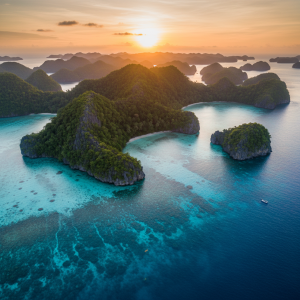
From the bustling biomass of the Dampier Strait, we navigate northwest towards the iconic karst island seascapes. While Wayag’s viewpoint is the archipelago’s most photographed image, the underwater world here is defined by its unique geology. Our primary objective is a site known as “The Passage,” a narrow, river-like channel that snakes between the islands of Gam and Waigeo. Diving here feels less like being in the open ocean and more like exploring a submerged canyon. The depths rarely exceed 15 meters, but the environment is extraordinary. On one side, mangrove roots stretch into the water, while just meters away, vibrant sea fans and hard corals cling to the channel walls. It’s a rare intersection of two distinct ecosystems. Further south, near the Piaynemo island group, we find Melissa’s Garden. I can say without hyperbole that this is one of the most extensive and healthy shallow coral reefs on the planet. It’s a freediver’s playground. Spanning an area equivalent to several football fields at a depth of just 3 to 10 meters, it allows for exceptionally long, relaxed dynamic apnea explorations. You can spend an entire dive swimming in one direction over a continuous, geometrically complex carpet of acropora and table corals, keeping an eye out for the camouflaged wobbegong sharks that rest on the sandy bottom. Navigating these unique sites is a highlight of any expertly guided freedive trip.
The Southern Enigma: Misool’s Pristine Sanctuaries
The longest overnight passage of our journey takes us south to Misool, a region that many, including myself, consider the crown jewel of Raja Ampat. Its remoteness has protected it, but its continued vitality is a direct result of forward-thinking conservation. The Misool Marine Reserve, a 1,220 square kilometer no-take zone privately funded and patrolled by local rangers since 2005, is a testament to what is possible. The results are undeniable: a study documented a 250% average increase in fish biomass in just the first six years. Our first dive here is at Magic Mountain, a submerged ridge that serves as a cleaning station for both reef mantas and the larger, more elusive oceanic manta rays. The protocol here is strict: approach slowly, remain passive, and let these intelligent creatures dictate the encounter. On a good day, you can witness half a dozen of these giants circling gracefully. Nearby sites like Nudi Rock and Boo Rock (named for two swim-through holes in the rock) showcase Misool’s other signature feature: soft corals of an almost hallucinogenic vibrancy. The walls are draped in yellow, orange, and purple dendronephthya corals, creating a kaleidoscopic backdrop for your descent. This area is so significant it is part of a larger region on the Raja Ampat Islands‘ tentative list for UNESCO World Heritage status, a recognition of its universal value.
The Art of the Itinerary: Pacing, Safety, and Logistics
A route of this magnitude is a marathon, not a sprint. The temptation is to dive every site from dawn until dusk, but this leads to fatigue and diminishes the experience. A well-paced 12-day itinerary allows for three focused dives per day, with ample surface time for rest, exploration by kayak, and processing the sheer volume of marine life you’ve witnessed. According to Maria van der Volk, a dive safety officer I often work with on these expeditions, “In a location this remote, your first priority is conservative diving. Medical assistance can be over 12 hours away. We plan our deep dives for the morning and keep afternoon profiles shallower. No exceptions.” This professional approach is critical. Every diver should have DAN (Divers Alert Network) insurance. The logistics of entry are straightforward: fly into Sorong (SOQ), where your liveaboard will depart. All visitors are required to purchase a Marine Park Permit (known as a PIN), which costs IDR 1,000,000 (approximately $65 USD) and is valid for 12 months. This fee directly supports the patrols and conservation efforts that keep this paradise protected. Our society advocates for itineraries that prioritize both safety and immersion, the core of the Raja Ampat freedive philosophy.
Quick FAQ: Your Raja Ampat Freediving Route Questions Answered
What is the best time of year to freedive in Raja Ampat?
The prime season runs from October to April. During these months, the seas are at their calmest, and visibility often exceeds 30 meters. The shoulder months of May and September can also be excellent, often with fewer vessels in the area, though you may encounter more variable weather patterns.
What level of freediving certification is required for this route?
To fully appreciate the diversity of sites, an AIDA 2, PADI Freediver, or equivalent certification is highly recommended. While many reefs are shallow, key sites like Blue Magic and parts of Misool are best experienced with a comfort level at depths between 15 and 25 meters. More importantly, certification ensures you have mastered essential safety and buddy rescue protocols.
Can this route be accomplished from a land-based resort?
No, not comprehensively. The nautical miles separating the Dampier Strait from the Misool region are simply too great for daily excursions from a single point. A resort is an excellent base for exploring one specific area in depth, but to connect the archipelago’s highlight reels, a liveaboard is the only practical and efficient platform.
What are the essential fees I should know about?
The primary fee is the Raja Ampat Marine Park Entry Permit (PIN). As detailed by Indonesia’s official tourism board, the cost for foreign tourists is IDR 1,000,000 (about $65 USD), and it remains valid for 12 months from the date of purchase. This fee is a direct investment in the conservation of the reefs you are there to enjoy.
This route is more than a list of coordinates; it is a pilgrimage to the source. It is a journey through the planet’s richest marine ecosystem, experienced on the profound intimacy of a single breath. It requires planning, expertise, and a deep respect for the environment. The rewards, however, are immeasurable—a connection to the ocean in its most potent and unadulterated form. To begin charting your own journey, explore the bespoke expeditions and training opportunities we feature at the Raja Ampat Freedive Society.