Updated: May 2026
Freediving in Raja Ampat in October: A Complete Guide
- Glassy Seas: The subsiding winds create flat, calm surfaces, optimal for line training and effortless exploration of the islands.
- Exceptional Visibility: Water clarity frequently surpasses 30 meters, offering unobstructed views of Raja Ampat’s world-renowned coral biodiversity.
- Peak Megafauna Encounters: October is a prime period for observing oceanic manta rays at their cleaning stations and an increase in pelagic sightings.
Freediving in Raja Ampat in October: A Complete Guide
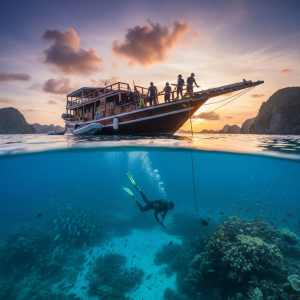
The air is thick with the scent of salt and damp earth. Below the hull of our phinisi, the water is an impossible shade of turquoise, so clear you can trace the shadows of parrotfish grazing on the reef 15 meters below. It is early October, and the Dampier Strait is holding its breath. The sun, already high at 9 a.m., warms the teak deck as we perform our final stretches. This is the moment before the descent, a quiet ritual of preparation. As I slip into the 29°C water, the surface world dissolves into a muffled hum. The only sound is my own slowing heartbeat, a steady drumbeat counting down to a silent, vertical journey into the heart of the Coral Triangle. This is the singular experience of freediving in Raja Ampat in October, a time when the world’s most biodiverse marine ecosystem reveals its most intimate secrets.
Why October is the Insider’s Choice for Raja Ampat
For the discerning traveler, timing is everything. While the guidebooks often point to the December-to-February window as Raja Ampat’s high season, those of us who have spent years navigating these waters know the true golden period begins in October. This month represents a meteorological sweet spot. The southeast monsoon, which brings slightly windier and wetter conditions from June to September, has all but dissipated. What follows is a period of profound calm before the peak season crowds arrive. The result is an archipelago that feels both wild and accessible. “October is when the archipelago exhales,” explains Iwan Kusuma, a marine biologist and our lead guide for over a decade. “The water settles, the last of the seasonal plankton blooms clear out, and the visibility becomes truly spectacular.” We consistently measure horizontal visibility in excess of 30 meters, and on some days, it can feel limitless. Water temperatures are a consistent 28-30°C, allowing for long, comfortable sessions in a 1.5mm suit. This is the time for serious line training off a private tender or simply exploring the vast reef systems on a single breath. Furthermore, operators often have more availability, and while Raja Ampat is never a budget destination, pricing for a ten-day charter can be 10-15% more favorable than in the peak of January.
Navigating the Currents and Conditions of the Dampier Strait
The Dampier Strait, the vast channel separating the islands of Waigeo and Batanta, is the vibrant, beating heart of northern Raja Ampat. Its legendary currents, which can surge up to six knots during spring tides, are the engine of its biodiversity. These powerful flows transport nutrient-rich waters from the deep ocean, feeding the corals and attracting a density of marine life that is unmatched anywhere on Earth. For a freediver, understanding and working with these currents is paramount. A site like Cape Kri, which famously holds the world record for the most fish species (374) identified on a single scuba dive, is a perfect example. On a slack tide, it is a magnificent coral garden. When the current runs, it becomes a theater of pelagic action, with massive schools of trevally, barracuda, and Napoleon wrasse holding their position in the flow. This is where expert guidance, a core tenet of any Raja Ampat Freediving expedition, becomes non-negotiable. Our guides plan every session around the tidal charts, ensuring we arrive at sites like Manta Sandy or Blue Magic at the precise moment for the best encounters and safest conditions. This region is the epicenter of the Coral Triangle, an area containing 76% of the world’s known coral species, and diving here feels like a journey to the origin of life itself.
The Misool Equation: Southern Sanctuaries and Marine Protected Areas
While the Dampier Strait is famed for its high-voltage action, the southern archipelago of Misool offers a different, more ethereal experience. Characterized by its dramatic karst topography—hundreds of limestone islets sculpted by millennia of wind and water—Misool is a sanctuary of soft corals and staggering biodiversity. Reaching this remote paradise requires a significant open-water crossing from Sorong, a journey that is made far more comfortable by the calm seas of October. The true jewel of this region is the Misool Marine Reserve, a 1,220-square-kilometer area established in partnership with the local communities. This no-take zone, one of the most successful conservation initiatives on the planet, has resulted in a documented 250% average increase in fish biomass in just over six years. As a freediver, the results are palpable. Descending into the water at a site like Magic Mountain or Boo Windows, you are met with a density and fearlessness of life that feels prehistoric. Reef sharks patrol the drop-offs in abundance, massive schools of fusiliers cloud the sun, and the soft coral gardens are an explosion of color. The area’s success has contributed to Raja Ampat’s placement on the UNESCO World Heritage Tentative List, recognizing its outstanding universal value. A visit to Misool is more than a dive trip; it is a powerful lesson in what is possible when conservation is prioritized.
Gearing Up: The Luxury Liveaboard vs. The Private Resort
The approach to experiencing Raja Ampat is a choice between two distinct philosophies of luxury travel: the nomadic freedom of a liveaboard or the rooted comfort of a land-based resort. For the dedicated freediver, the liveaboard, particularly a traditional Indonesian phinisi, presents a compelling case. These magnificent wooden vessels grant access to the archipelago’s most remote and diverse sites, from the northern shores of Waigeo to the southern sanctuaries of Misool, all within a single journey. Waking up at a new world-class dive site each morning is an unparalleled privilege. A high-end 10-day charter, which can range from $6,000 to $10,000 per person, offers not just transport but a full-service expedition platform with dedicated tenders, expert guides, and gourmet cuisine. Conversely, a stay at one of the region’s elite eco-resorts, such as Misool Eco Resort or Papua Explorers, offers a different kind of indulgence. Here, the luxury is in space, permanence, and amenities. Over-water bungalows, dedicated spa services, and the option for land-based excursions appeal to travelers who prefer a home base. The key for freedivers choosing a resort is ensuring they offer specialized freediving support, as most are heavily scuba-oriented. The Raja Ampat Freedive Society excels at curating both pathways, crafting bespoke Coral Triangle Adventures that match the vessel or resort to the specific desires and skill levels of our clients, always ensuring a dedicated, certified freediving professional is leading the way.
Beyond the Reef: The Culture and Logistics of a West Papuan Expedition
An expedition to Raja Ampat is a journey to one of the planet’s final frontiers, and its logistics require careful, expert planning. The gateway to the archipelago is the city of Sorong (SOQ) in West Papua. Most international travelers will arrive via Jakarta (CGK) or Singapore (SIN), connecting to a domestic flight to Sorong. Upon arrival, the logistics of permits, transfers, and provisions are best left to a trusted operator. Every visitor is required to purchase a Raja Ampat Marine Park Entry Permit, known locally as a PIN. The fee is IDR 700,000 (approximately $45 USD) for international guests and is valid for one year, with proceeds directly supporting conservation and community programs. This is a critical component of the region’s sustainable tourism model. As detailed by Indonesia’s official tourism portal, indonesia.travel, respecting local culture is as important as respecting the marine environment. The Papuan people have a deep, ancestral connection to these lands and waters, and engaging with communities through responsible operators provides valuable economic support. From navigating the flight schedules to ensuring all permits are in order and dietary requirements are flawlessly executed on a remote vessel, our team manages every detail of your raja ampat freedive journey, allowing you to focus solely on the profound experience of the dive.
Quick FAQ: Your October Raja Ampat Questions Answered
What is the water temperature in Raja Ampat in October? The water is consistently warm, ranging from 28°C to 30°C (82°F to 86°F). For most freedivers, a 1.5mm or 3mm wetsuit provides the perfect balance of thermal protection for long sessions and flexibility for deep equalization. The surface is typically warm enough for comfortable breathing and relaxation between dives.
Are there many other boats or tourists in October? October is an ideal shoulder season. You will encounter significantly fewer vessels and other tourists compared to the peak months of December through February. This allows for a greater sense of solitude and exclusivity at premier dive sites, often granting you the privilege of having a world-class reef entirely to yourself.
What kind of marine life can I expect to see? October is a fantastic month for megafauna. Oceanic and reef manta rays are highly active at their cleaning stations, particularly in the Dampier Strait. Encounters with various reef shark species (blacktip, whitetip, and wobbegong) are common. You will also be immersed in enormous schools of fusiliers, surgeonfish, and jacks, alongside the archipelago’s celebrated macro life, such as pygmy seahorses and ghost pipefish.
Is travel and dive insurance necessary? It is absolutely mandatory. The remote nature of Raja Ampat means that access to advanced medical care is limited. All reputable operators require guests to have comprehensive insurance that specifically covers diving-related incidents and includes emergency medical evacuation. The nearest hyperbaric chamber is in Waisai, but serious medical issues necessitate evacuation to a major international hospital, a costly and complex procedure without proper coverage.
The unique confluence of calm seas, crystalline water, and peak biological activity makes October the most strategic time to explore the depths of Raja Ampat. It is a month that rewards those who seek to move beyond the well-trodden path, offering a more intimate and profound connection with this underwater realm. To do so with guides who understand the subtle language of the currents and the rhythms of the reef transforms a trip into a true expedition. The silent world of Raja Ampat awaits. To craft your bespoke October journey, explore the possibilities with the Raja Ampat Freedive Society. Our specialists are ready to curate an experience that transcends the ordinary.