Updated: May 2026
Raja Ampat Freedive Spots — Misool Briefing, Boo Rocks to Wedding Cake
Raja Ampat Freedive is a curated Indonesia luxury tourism experience offered by Raja Ampat Freedive Society: handpicked routes, vetted operators, transparent pricing, and 24/7 concierge support across Indonesia.
- What makes Raja Ampat Freedive a premium experience.
- How Raja Ampat Freedive Society curates exclusive access and concierge logistics.
- Routes, seasons, and pricing transparency — no hidden fees.
Misool freedive spots — the soft coral capital of Raja Ampat.
Boo Rocks, Magic Mountain, Wedding Cake, Wayilbatan caves: where the southern Raja Ampat archipelago concentrates the world’s densest soft coral and the silent Phinisi lagoons that shelter sleeping wobbegong sharks.
Why Misool, specifically
Misool is the southernmost of the four kingly islands of Raja Ampat. While Waigeo and Dampier Strait dominate the Raja Ampat marketing, serious freedivers and underwater photographers tend to rank Misool highest. The reason is karst topography. Misool’s southern islets are uplifted limestone — sheer cliffs dropping into reef shallows, sheltered lagoons, hidden caves, and pinnacles rising from sand bottoms. The result is the densest soft coral concentration in the entire Coral Triangle. Conservation International surveys recorded over 600 fish species in Misool’s protected zone. The Misool Marine Reserve, established 2005, has been one of Indonesia’s most successful no-take zones.
Boo Rocks — the introduction site
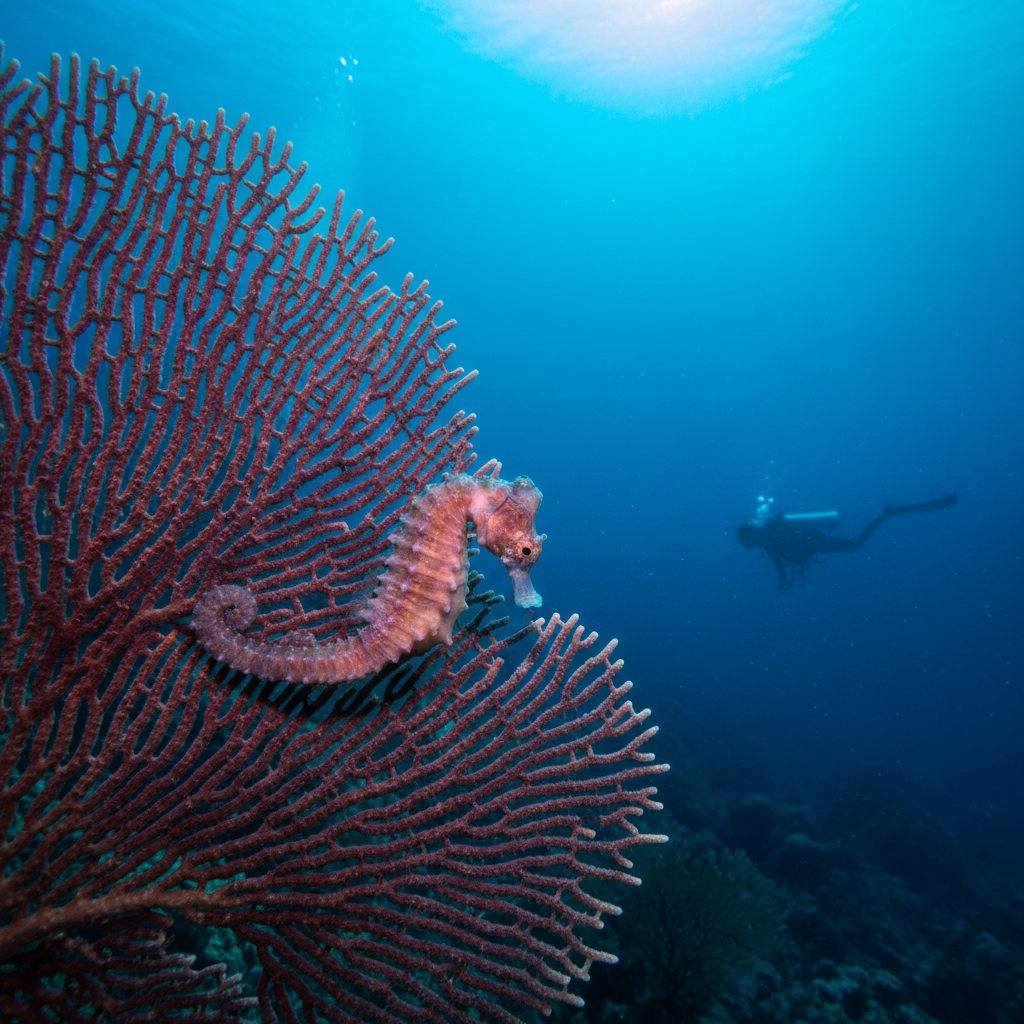
Boo Rocks is the freedive site we typically open Misool with. Three vertical pinnacles rising from a sand bottom at 22m. Reef tops at 4-6m. Soft coral wall faces and gorgonian fans on the north sides. Average current is mild — inside the lagoon protection. Visibility 20-30m typical. The site rewards multiple short descents over 90 minutes: each pinnacle has a different orientation and fish school. Pygmy seahorses on the deeper gorgonians (need a guide pointing — they are 2cm). Bumphead parrotfish in groups at sunrise. We use Boo Rocks to refresh equalisation technique after the Dampier transit, before progressing to the more demanding sites.
Magic Mountain — the seamount
Magic Mountain is a pelagic-current seamount roughly 10km off the main Misool karst. The summit sits at 8m, dropping to 35m+. Schooling barracuda, jacks, occasional Thresher and grey reef sharks. Mantas during peak season (December-March). Current strength is moderate to strong; we time the dive to slack tide and brief drift technique on the surface buoy. This is an intermediate-to-advanced freedive site. AIDA-2 minimum. The depth and current means freedivers practice negative-pressure equalisation and conservative breath-up. Reward: pelagic encounters that the inside-lagoon sites can’t deliver.
Wedding Cake — the soft coral pillar
Wedding Cake is the photographer’s favourite Misool site. A solitary soft coral pillar rising from a 14m sand bottom. The summit at 4m is so densely covered with coloured soft coral that the silhouette is the wedding cake the site is named for. Visibility consistently 25-30m. We allocate 90 minutes here so each freediver completes 8-10 descents to refine breath-hold and equalisation rhythm. Pygmy seahorse, ghost pipefish, leaf scorpionfish are micro-subjects on the column itself. Schooling jacks pass over the summit on incoming tide. The site is sheltered enough for first-day-of-Misool divers and rewarding enough for repeat visits.
Wayilbatan caves — sleeping shark site
Wayilbatan is a karst islet with a series of cave overhangs sheltering sleeping wobbegong sharks. Wobbegongs (the carpet-shark genus Eucrossorhinus) are ambush predators that rest motionless on cave floors during the day. We freedive in shallow (3-7m) cave entrances — never enter cave passages, that is technical-cave-diving territory. The sharks observed but unspooked. Octopus, banded sea kraits, and pygmy seahorses also frequent the cave entrances. The site is sheltered and suits a relaxed afternoon session after the Magic Mountain morning.
Daram and Far Misool — for repeat visitors
Daram and the further Misool sites (Tank Rock, Andiamo) are typically reserved for our return guests. They are remote — 4-6 hour transits from the central Misool anchor — and are technically demanding (deeper reef tops, stronger currents). We add Daram to a 9-day extended voyage when conditions warrant. For first-time Misool guests on the standard 7-day voyage, we focus the experience on Boo, Magic Mountain, Wedding Cake, and Wayilbatan; this is enough to fill three remarkable days.
When Misool is at its best
November-March is peak Misool freediving season. Water clarity at its best (25-35m), water temperature 28-29°C (3mm wetsuit comfortable), winds calm. October and April are shoulder months — still dive-able, occasional wind. May-September the south-east monsoon brings stronger surface winds and reduced visibility on the southern karst exposure; we typically focus voyages on the more sheltered Dampier Strait during those months. Read our full month-by-month seasonal guide for detail. The Misool routes pair well with our 7-day private voyage, which threads three Misool days plus three Dampier days plus one Wayag karst day.
Compare with the SCUBA experience
Most Misool dive itineraries are SCUBA-led. The freediving experience is structurally different — see our freediving vs SCUBA briefing for the full comparison. Short version: Misool reef tops sit at 4-8m exactly within freedive range, the soft coral density is photographically richer at shallow depths, and the silent approach lets sleeping wobbegongs and pygmy seahorses behave naturally. SCUBA divers get the deeper walls (15-30m) and longer bottom time. Both have their place; we curate the freedive variant.
See the 7-day voyage
Three confirmed 2026 departures threading Misool + Dampier. Six freedivers per voyage.
Practical guide — Raja Ampat (West Papua)
Getting there
Domine Eduard Osok Airport (SOQ), Sorong is the gateway. From Jakarta CGK or Bali DPS, expect a 4-hour direct flight via Garuda or Lion Air. From Sorong, our Phinisi departs at 16:00 same-day. Most international guests arrive Sorong morning of departure day; we recommend one buffer night at our partner hotel in Sorong if your inbound is tight.
Best time to visit
October-April is peak freediving season for Raja Ampat broadly. Water temperatures 27-29°C (3mm wetsuit comfortable). Visibility 25-35m at best sites. Dry season, calm seas. May-September the south-east monsoon brings stronger winds and reduced southern visibility. See our detailed month-by-month guide.
What you need
AIDA-2 certification or equivalent (PADI Freediver, Molchanovs Wave 2, SSI Level 2). Comfortable holding breath 60-90 seconds at rest. Comfortable equalising to 8m static minimum. Open-water comfort. Standard freediving gear (we provide weights, lanyards, buoys); your own mask, fins, and wetsuit recommended.


